
Assisted Reproductive Rechnology (ART)
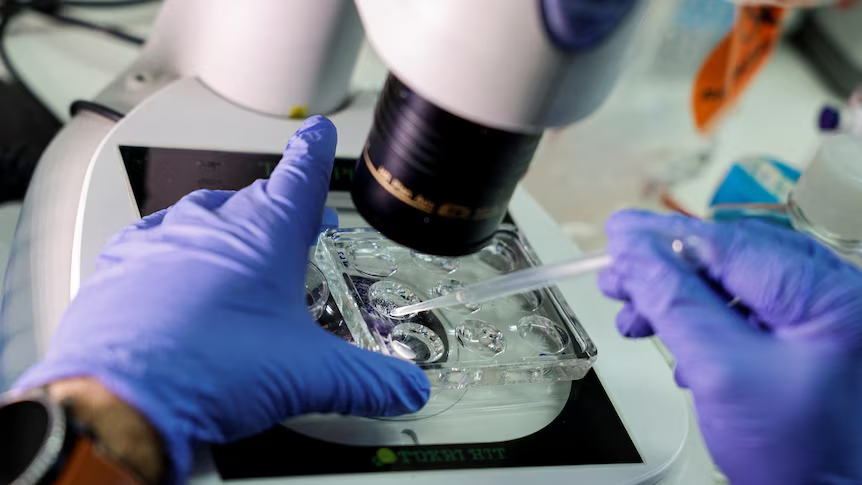
Assisted Reproductive Rechnology (ART) is used to treat infertility. It includes fertility treatments that handle both eggs and sperm. It works by removing eggs from the ovaries. The eggs are then mixed with sperm to make embryos. The embryos are then put back in the parent’s body. In vitro fertilization (IVF) is the most common and effective type of ART.
The most common complication of ART is a multiple pregnancy. It can be prevented or minimized by limiting the number of embryos that are put into the parent’s body.
Common Types of Assisted Reproductive Technology
• In Vitro Fertilization (IVF):
A process where eggs and sperm are combined in a lab to create embryos, which are then transferred to the uterus for implantation.
• Intracytoplasmic Sperm Injection (ICSI):
A specialized form of IVF where a single sperm is directly injected into an egg’s cytoplasm to achieve fertilization.
• Intrauterine Insemination (IUI):
Involves processing sperm in a lab and then placing the prepared sperm directly into a woman’s uterus to increase the chances of fertilization.
• Cryopreservation:
The process of freezing and storing eggs, sperm, or embryos for later use, often to preserve fertility.
• Gamete and Embryo Donation:
The use of donated sperm, eggs, or embryos from a third party to enable pregnancy for individuals or couples.
• Preimplantation Genetic Testing (PGT):
A genetic analysis of embryos or eggs to detect genetic abnormalities or chromosomal issues before they are transferred for pregnancy.
How ART Works (General Steps)
1. Gamete Retrieval: Eggs are retrieved from a woman’s ovaries, and sperm are collected from the intended parent or a donor.
2. Fertilization: Eggs and sperm are brought together in a lab for fertilization through conventional IVF or ICSI.
3. Embryo Culture: The fertilized eggs (embryos) are grown in a laboratory for a few days.
4. Embryo Transfer: A selected embryo is then transferred into the woman’s uterus.
Why ART is used
• Infertility:
To treat infertility in both men and women, which can stem from various underlying medical conditions.
• Genetic Conditions:
To screen for genetic disorders or chromosomal abnormalities before pregnancy.
• Reproductive Options:
To offer options for people who may be unable to carry a pregnancy to term or who want to start a family using donor gametes or surrogacy.
