

IVF Options
IVF (In Vitro Fertilisation) is one of the most effective fertility treatments available, helping individuals and couples overcome a wide range of fertility challenges.
Whether you're experiencing difficulties conceiving, preserving your fertility for the future or exploring assisted reproductive options, our specialists will guide you through each step with a personalised treatment plan.
What is IVF?
In vitro fertilisation (IVF) is a treatment where eggs are fertilised with sperm in a specialised laboratory before an embryo is transferred into the uterus.
Treatment begins with fertility medication to stimulate the ovaries to produce multiple eggs. Once the eggs have matured, they are collected during a short procedure and fertilised with sperm in our laboratory. The resulting embryos are carefully monitored, and the selected embryo is transferred into the uterus; any suitable remaining embryos can be frozen for future use.
Who can benefit from IVF?
IVF may be recommended for people experiencing:
Blocked or damaged fallopian tubes
Endometriosis
Ovulation disorders, including PCOS
Male factor infertility
Unexplained infertility
Recurrent miscarriage requiring further investigation
Fertility preservation or planned future pregnancy
Same-sex couples or single people using donor sperm or donor eggs
Your fertility specialist will discuss whether IVF is the right option based on your medical history, fertility goals and test results.
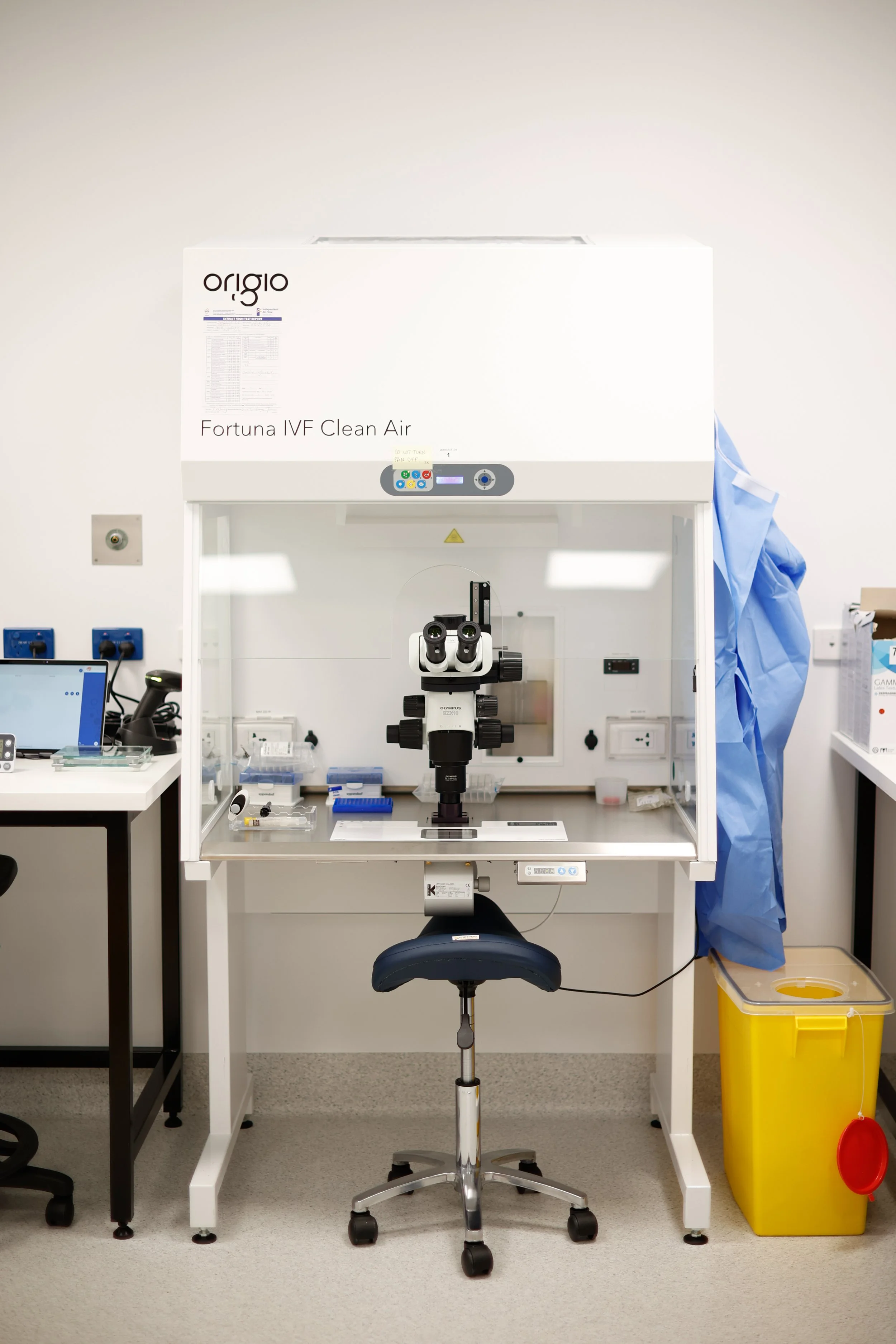
We believe you should know what to expect before treatment begins, not after. The cost of IVF varies depending on the type of treatment you need, whether additional procedures such as ICSI or genetic testing are recommended, and how many cycles are involved.
Most patients are eligible for Medicare rebates that significantly reduce the out-of-pocket cost. Day hospital, anaesthetist and medication fees apply on top of your treatment cycle fee, and your specialist will walk you through every figure that applies to your situation before you commit to anything.
You can view a full breakdown of our IVF and treatment costs, including frozen embryo transfer, IUI and egg freezing fees.
Most patients receiving IVF in Australia are eligible for a Medicare rebate, which significantly reduces the out-of-pocket cost of treatment. Eligibility generally requires a medical reason for treatment and a referral from your GP or specialist.
The rebate applies per cycle, and the amount you receive can differ between your first and subsequent cycles in a calendar year. Once you reach the Medicare Safety Net threshold, your out-of-pocket costs for the remainder of the year may reduce further.
Rebates for egg freezing apply only where treatment is medically indicated rather than elective. Our team will confirm exactly what applies to you before treatment begins.
Your IVF journey
Initial consultation
Meet with one of our fertility specialists to review your medical history, discuss your goals and arrange any recommended fertility testing.
Ovarian stimulation
Daily hormone medication encourages the ovaries to produce multiple mature eggs over approximately 10 to 14 days. During this time, you'll attend regular blood tests and ultrasound scans to monitor your progress.
Egg collection
Once the eggs are ready, they are collected during a short procedure performed under light sedation.
Fertilisation
The eggs are fertilised with sperm in our laboratory. In some cases, Intracytoplasmic Sperm Injection (ICSI) may be recommended, where a single sperm is injected directly into each mature egg.
Embryo transfer
The healthiest embryo is transferred into the uterus, usually five days after egg collection. This is a simple procedure that generally does not require anaesthesia.
Pregnancy test
Approximately 11 days after your embryo transfer, a blood test will determine whether treatment has been successful.
Additional IVF options
Depending on your circumstances, your treatment may include:
Intracytoplasmic Sperm Injection (ICSI)
Frozen Embryo Transfer (FET)
Donor sperm or donor eggs
Embryo freezing and storage
Fertility preservation
Our specialists will explain each option and recommend only the treatments appropriate for your situation.
What does IVF cost in Sydney?
Medicare and IVF
Personalised care at every step
Our experienced fertility specialists work closely with you to develop a treatment plan that reflects your medical needs, personal preferences and family-building goals.
From your first consultation through to ongoing support, we're here to provide expert care, clear guidance and compassionate support throughout your IVF journey.
Every fertility journey is unique. Our experienced team is here to listen, guide and support you with personalised care. Book a consultation to explore your options and take the next step with confidence.
Frequently Asked Questions
-
A cycle is $11,850 upfront, with an estimated out-of-pocket cost of $6,013.20 for your first cycle in a calendar year and $5,297.15 for subsequent cycles (as at 1 July 2026). Medication and day hospital fees apply separately. See our fees page for the full breakdown.
-
Yes, for most patients.
-
Age is the single biggest factor, which is why a national average tells you very little about your own chances. As a guide, the most recent ANZARD data (2023) shows a live birth rate per embryo transfer of around 38% for women under 30, declining steadily from there. Success also builds across cycles, so your chance after two or three attempts is meaningfully higher than after one.
For an estimate based on your age, diagnosis and history, YourIVFSuccess.com.au is an independent, government-funded tool drawing on every cycle performed in Australia. Your specialist will also talk you through what the evidence suggests for your specific circumstances, including where the honest answer is that IVF may not be the best pathway.
-
Around four to six weeks from your first medication to your pregnancy test. Stimulation runs 10 to 14 days with monitoring every few days, then egg collection, five days of embryo development, transfer, and a blood test 11-12 days later.
-
In conventional IVF, eggs and prepared sperm are placed together and fertilisation happens naturally. With ICSI, an embryologist injects a single sperm directly into each mature egg. This is usually recommended for male factor infertility, previous fertilisation failure, or when using frozen eggs.
-
Your care doesn't stop with your specialist. You'll have a dedicated nursing team you can call with questions between appointments, and our embryology team keeps you updated on how your embryos are developing rather than leaving you waiting in silence.
Fertility treatment can be emotionally demanding, so looking after your emotional wellbeing is just as important as looking after your physical health. We have a dedicated fertility counsellor that is available throughout your treatment.
-
Depending on your circumstances and what your specialist recommends, we may invite you in for a review appointment to talk through what happened. This may include how you responded to stimulation, the quality of your eggs and embryos, and what the cycle tells us about your treatment. Most people who succeed with IVF do so within their first three cycles, so one unsuccessful cycle rarely means the pathway is closed.
If a review is recommended, we’ll be straightforward with you about what the evidence suggests, whether that means adjusting your treatment plan, considering donor eggs, or taking a break or pausing treatment. You won’t be encouraged into another cycle simply because it’s the next thing on the list.
-
Yes. One in five IVF cycles in Australia are now undertaken by single women and same-sex couples. Depending on your circumstances, treatment may involve donor sperm, donor eggs, IUI or reciprocal IVF. More on our donor programs and LGBTQIA+ pathways pages.