
Become an Egg Donor in Sydney: What's Actually Involved
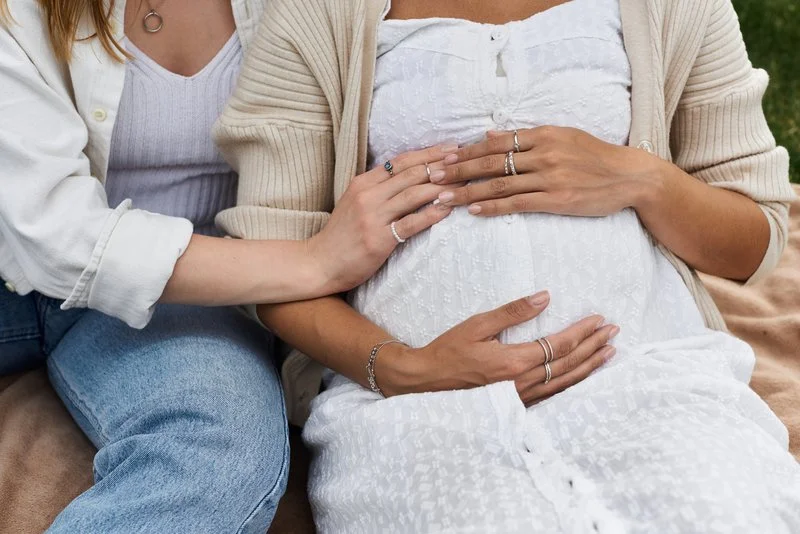
Choosing to donate your eggs is a deeply generous decision. For some women, it is a way of helping someone else have the family they have been hoping for.
It is also completely natural to have questions before you decide. You may be wondering what the process involves, what the treatment will feel like, how much time it will take, whether it will affect your own fertility, and what egg donation could mean for you and your family in the years to come.
We want you to have clear, honest information from the beginning, so you can make a decision that feels right for you.
The preparation to become an egg donor is deliberately thorough. There are medical checks, counselling and paperwork to complete before treatment begins. This takes time, but every part of the process is there to make sure you are comfortable, properly informed and supported, and that donation is right for everyone involved.
This guide takes you through the process from your first conversation with us through to egg collection and recovery, as well as what you may want to think about for the future.
Why are egg donors needed?
For many people, donated eggs offer a chance to have a child when using their own eggs is not possible or is unlikely to result in a healthy pregnancy.
Women and couples who may need your donated eggs include:
Women who have gone through premature menopause
Women whose ovaries have stopped producing good quality, mature eggs, after chemotherapy or radiotherapy
Women who have no ovaries because of malformation or surgery
Women who have previously responded poorly to hormonal stimulation
Women with low egg numbers or egg quality due to age or another condition
Women who want to avoid passing on a genetic condition they carry
Single men and same-sex male couples building a family
There are currently more people seeking donor eggs in Australia than there are women coming forward to donate. This means there can be a waiting list for recipients, and if you are accepted as a donor, you may be matched relatively quickly.
For many donors, knowing that their donation may help someone become a parent is one of the most meaningful parts of the experience.
Who can become an egg donor?
Because egg donation involves both medical treatment and long-term considerations, we take care when assessing potential donors.
Generally, we will need to:
Be aged between 21 and 35 and preferably have completed your own family. You can be older than 35 if you are donating to a friend or family member, though your recipient will be counselled about the implications of using an older donor
Be able to give a full medical history, and know your own biological origins if you were adopted
Provide formal identification such as a Medicare card, driver licence or passport
Attend a consultation with a Life Fertility Clinic specialist, who will review your personal, medical and reproductive history
Attend at least two counselling sessions, with your partner if you have one
Complete infectious disease screening, including but not limited to HIV, hepatitis B and C, HTLV 1 and 2, and syphilis
Complete genetic screening, including screening for cystic fibrosis, karyotype, blood group and other genetic conditions relevant to your background.
Repeat the infectious disease blood tests six months after the first round
Give consent to us to contact other fertility clinics to verify your donation history, if you have donated before
Create a detailed donor profile, including their physical characteristics, hobbies and interests, personal and family medical history, and a personal message for any child born from their donation.
Consent to your details being recorded on our donor register and the NSW Central Register
Understand and consent to identifying information being released to any person conceived using your eggs, if they request it after turning 18
Once screening, questionnaires, counselling and consents forms are all complete your specialist will provide final medical clearance before you can begin treatment.
Can I be paid to donate my eggs?
No. It is illegal in Australia to receive payment for donating eggs.
The recipient of your donation covers the cost of the treatment cycle in which your eggs are collected. They may also choose to reimburse your reasonable out-of-pocket expenses, so keep your receipts. Reimbursement is based on documented actual costs, not a set fee.
If you choose to donate your eggs anonymously to a recipient through Life Fertility, we’ll cover the costs of your screening blood tests, counselling and cycle fees.
Will I know who receives my eggs?
That depends on the type of donation you choose.
You can donate to someone you know, such as a family member or friend, or you can choose to donate anonymously to a recipient through Life Fertility.
If you donate anonymously, you and the recipient will not be identified to each other at the time of donation.
The recipient will receive a non-identifying donor profile. This includes information such as your hair and eye colour, height, build and complexion, as well as your blood group, career, education, lifestyle, interests and relevant medical information.
It is important to understand that the word "anonymous" describes the circumstances of the donation itself. It does not mean that your identity can never be discovered in the future.
What does anonymity mean in the future?
Donor conception has changed considerably over the years. Today, people have access to commercial DNA and ancestry testing that can sometimes help them identify biological relatives.
This means that, even where a donation was originally anonymous, there is a possibility that a donor and a donor-conceived person may eventually be able to identify or contact one another through DNA matching or shared family connections.
This is not something you need to be frightened by, but it is something we want you to understand before you donate. Counselling gives you the opportunity to talk through what this might mean for you and how you might feel about contact in the future.
How long does the whole process take?
The preparation to become an egg donor usually takes around six to twelve weeks.
There is some important preparation before treatment begins, including your specialist consultation, education session, counselling, medical and genetic screening, questionnaires and consent forms.
Your infectious disease screening will also need to be repeated six months after your initial tests.
Once everything is ready, the treatment cycle itself usually involves around four visits to the clinic, as well as a day off work for your egg collection.
We will work with you to find a suitable time to begin treatment wherever possible, with the aim of keeping the impact on your work, family and everyday life as manageable as possible.
What happens during the treatment cycle?
Synchronisation. If you are donating to a specific recipient, we may need to synchronise your menstrual cycle with theirs so that the embryos are ready for transfer when the recipient is ready. This may involve taking the oral contraceptive pill from the start of your period for a minimum of three weeks. Your nurse coordinator will explain exactly when to start and stop. If you would prefer not to take the oral contraceptive pill, talk to your doctor. There may be another option, depending on your circumstances, and we will only proceed with a treatment plan you are comfortable with.
Stimulation. We stimulate your ovaries to develop more egg-containing follicles than usual. This is a daily injection of follicle stimulating hormone, which you give yourself after instruction from your nurse coordinator. You may also have additional injections to stop you ovulating too early. Your doctor will recommend the protocol most appropriate for you.
Monitoring. After a set number of days on the medication, you will have an ultrasound to see how your follicles are developing. It uses a vaginal probe, does not need a full bladder and usually takes only a few minutes. Your doctor may adjust your medication depending on how your ovaries are responding. The aim is to achieve a good response while keeping you as comfortable and safe as possible.
The trigger. You will usually have second scan, sometimes a third, around 8 to 12 days after starting stimulation. Once your follicles have reached an appropriate size and number, your egg collection will be booked. You will then be shown how to give yourself your final "trigger" medication. This may be given as a nasal spray or injection and helps the eggs reach final maturity before collection. The trigger needs to be taken at a very specific time, usually 36 hours before your egg collection. Your nurse coordinator will give you clear instructions and will be available if you have any questions.
What happens on the day of egg collection?
Egg collection is performed using an ultrasound to guide a fine needle through the vagina and into the follicles in your ovaries. Gentle suction is then used to collect the eggs. You will be cared for by our recovery nurses after the procedure, while our laboratory team checks the eggs and lets you know how many were collected. You will usually go home around two hours later with an adult who can look after you. You will not be able to drive for 24 hours after the procedure, and we recommend taking the rest of the day to rest and recover.
How will I feel afterwards?
It is normal to have some abdominal discomfort after egg collection. For most women, this feels similar to period pain and can usually be managed with regular pain relief. You may also experience some vaginal bleeding, which should settle within a few hours. Most women find that these symptoms improve over the following two to three days, although everyone responds differently. Your care team will explain what is normal to expect and who to contact if you have any concerns during your recovery.
Something many donors don't realise
It is possible to become pregnant shortly after donating your eggs. Although your eggs have been collected, your body may still naturally release additional eggs following the treatment cycle. For this reason, we recommend avoiding intercourse until after your next period.
What are the possible risks?
Egg donation involves medication and a medical procedure, so there are some risks. Your health and wellbeing are monitored closely throughout the cycle, and your doctor will talk you through any concerns that arise.
Your ovaries may not respond enough. Occasionally, the ovaries do not respond as expected to the medication. If three or fewer follicles develop, your doctor may recommend stopping the cycle and reviewing your treatment before considering another attempt.
Your ovaries may respond strongly. Sometimes the ovaries respond more strongly than expected. If a very large number of follicles develop, your doctor may recommend stopping the cycle or changing your medication to reduce the risk of complications.
Not every follicle yields an egg. It is normal for not every follicle to produce an egg. On average, around 75% of follicles contain an egg, and approximately 85% of collected eggs are mature and suitable for use. Very occasionally, no eggs are collected or the eggs collected are not suitable for use.
Ovarian hyperstimulation syndrome. OHSS occurs when the ovaries become enlarged and fluid can collect in the abdomen and, in more serious cases, around the lungs. The medication and trigger protocols used today mean the risk of significant OHSS is very low. We also monitor you throughout treatment and may adjust or stop a cycle if we believe you are at increased risk. If OHSS does occur, it usually begins around three to four days after egg collection. Symptoms can include abdominal pain, bloating and swelling. Most cases are mild or moderate and settle within a few days. More severe cases are uncommon but can require hospital treatment. Your doctor and nurse coordinator will explain what symptoms to look out for and what to do if you are concerned.
Will donating affect my own fertility?
Current evidence indicates that egg donation does not reduce your future fertility or bring menopause forward. Each month, your ovaries naturally prepare a group of eggs. Usually, one egg is released and the others naturally stop developing. The medication used during egg donation encourages more of that month's group of follicles to mature. It does not use up your future supply of eggs. Your specialist will discuss your individual circumstances and any questions you have about your own fertility before you decide to proceed.
What are the chances my donation results in a baby?
Donated eggs can provide a valuable opportunity for someone trying to build their family, but no fertility treatment can guarantee a pregnancy or the birth of a baby. It is completely normal for some fertilised eggs not to continue developing to the five-day blastocyst stage, when an embryo may be transferred. From there, the outcome depends on several factors, including whether an embryo implants and a pregnancy develops.
Can I change my mind?
Yes. You can withdraw or change your consent at any time up until your eggs are inseminated, which usually happens a few hours after collection. We understand that circumstances and feelings can change. You should never feel pressured to continue simply because you have already completed screening, counselling or treatment. Once your eggs have been inseminated, however, you can no longer withdraw consent. From that point, you have no legal rights or responsibilities in relation to any resulting embryos, pregnancy or child. If you are having doubts at any point, please talk to us as soon as possible. Our role is to support you in making a decision that you feel comfortable with.
What is my legal position in New South Wales?
Egg donation in NSW is governed by the Assisted Reproductive Technology Act 2007. One of the most important things to understand is that donating your eggs does not make you the legal parent of a child born from your donation. Once your eggs have been inseminated, you have no legal rights or responsibilities in relation to any resulting embryos, pregnancy or child. The recipient or recipients are the legal parents and hold the associated rights and responsibilities. Your identifying information will also be recorded on the NSW Central Register. Providers are required to provide identifying information about donors to NSW Health following a live birth resulting from a donated gamete. A person conceived using your eggs can access identifying information about their donor once they turn 18. You can also request certain information about the outcome of your donation. If you donated anonymously, you may be able to receive non-identifying information about your recipient and information about the number and sex of children born from your donation.
How many families can my donation help?
NSW law places a limit on the number of women who can have children using the same donor's eggs. A provider must not use donated eggs in a way that is likely to result in children being born to more than five women. NSW Health has confirmed that this limit applies worldwide, not only to donations used within NSW. The limit also takes into account your own children. These rules are designed to help limit the number of donor-conceived siblings who may exist and reduce the possibility of accidental relationships between people who share a biological parent.
What about DNA Testing?
The NSW Central Register provides important protections and information for donor-conceived people. At the same time, the growing popularity of DNA and ancestry testing means that biological connections can sometimes be discovered outside formal registers. For this reason, anyone considering egg donation should understand that there is a possibility of being identified or contacted by a donor-conceived person in the future. This possibility is something we will discuss with you during counselling, so you can think about what it could mean for you before making your decision.
What does the counselling involve?
Counselling is an important part of the donation process, and you will need to attend at least two confidential counselling sessions with a Life Fertility Clinic counsellor. If you have a partner, they will also attend counselling with you. If you are donating to someone you know, such as a friend or family member, there will also be a joint counselling session with your recipient. Counselling is not about telling you whether you should donate. It is a chance to talk openly about what donation means to you, your relationships and your family, both now and in the future. You can talk about anything that is on your mind, including the physical treatment, your reasons for donating, how you might feel about a child born from your donation, how you might talk to your own children about it, or what future contact could look like. It also gives us the opportunity to make sure you understand the process and feel comfortable with what you are consenting to. We genuinely value your willingness to donate, but your wellbeing comes first. If, through the screening or counselling process, it becomes clear that donation may not be right for you, we will support you in that decision.
Questions worth sitting with first
There is no single "right" reason to become an egg donor, and there are no right or wrong feelings about it.
Some questions you may find helpful to think about before you begin, including:
How might I feel if a person born from my donation contacted me when they turn 18?
How would I explain my donation to my own children, now or in the future?
How might I feel if my donation resulted in a pregnancy? How might I feel if it did not?
Am I comfortable knowing that the recipient will make the decisions about the child's upbringing and life?
How does my partner feel about my decision, if I have one?
Am I choosing to donate because I genuinely want to, rather than because I feel I should?
If I am donating to someone I know, am I comfortable separating my relationship with them from the decision to donate?
These are not questions you need to have all the answers to before contacting us.
In fact, that is one of the reasons counselling is such an important part of the process. It gives you a private and supportive space to explore how you feel, without judgement or pressure.
How to get started
How do I get started?
If you're considering becoming an egg donor, you don't need to have everything figured out before you contact us.
The usual process is:
Speak with your GP and obtain a referral.
Book a consultation with a Life Fertility Clinic Sydney specialist.
Attend an education session and two counselling sessions, with your partner if you have one.
Complete your blood screening, genetic screening, questionnaires and consent forms.
Receive medical clearance.
Begin your treatment cycle.
You can also simply call us and ask a question.
Speaking with one of our nurse coordinators is not a commitment to becoming a donor. It is simply an opportunity to talk through the process, ask questions and see whether it might be right for you.
Life Fertility Clinic Sydney
Potts Point and Kogarah
Phone: +61 2 9057 9888
Support and further information
You don't have to make this decision on your own. There are also organisations that provide information and support to people involved in donor conception.
Australian Donor Conception Network. Volunteer-run since 1993, supporting donors, recipients, parents and donor-conceived adults.
ACCESS Australia. An independent non-profit representing people affected by infertility.
NSW Health. Information on the Central Register and the Assisted Reproductive Technology Act 2007.
We're here to answer your questions
If you've read this far, you're probably already giving egg donation some serious thought. You don't need to decide today.
Sometimes the best first step is simply having a conversation.
Call us on +61 2 9057 9888 or get in touch through our contact page. Our donor coordinators can talk you through the process, answer your questions and explain what it could look like around your work, family and everyday life.
There is no obligation to continue, and there is no cost for that initial conversation.
And if you need more time to think about it, that's completely okay too.
Choosing to donate your eggs is a very personal decision. We are here to give you the information, support and space you need to make the decision that is right for you.
Thank you for considering becoming an egg donor. Your decision could make an extraordinary difference to someone hoping to become a parent.